

HP Daily GK brings you 30 important exam-oriented GK questions for HPPSC, HP Patwari, HP Police, HP Clerk, and other HP Government exams. The HP GK questions are in both English and Hindi. The candidates preparing for HP Patwari must practice these multiple choice questions as they are based purely on HP Patwari exam syllabus.
📘 Current GK Topic: Indian History – Empires – The Sangam, Gupta and Harshavardhana Empire (as per HP Patwari Syllabus)
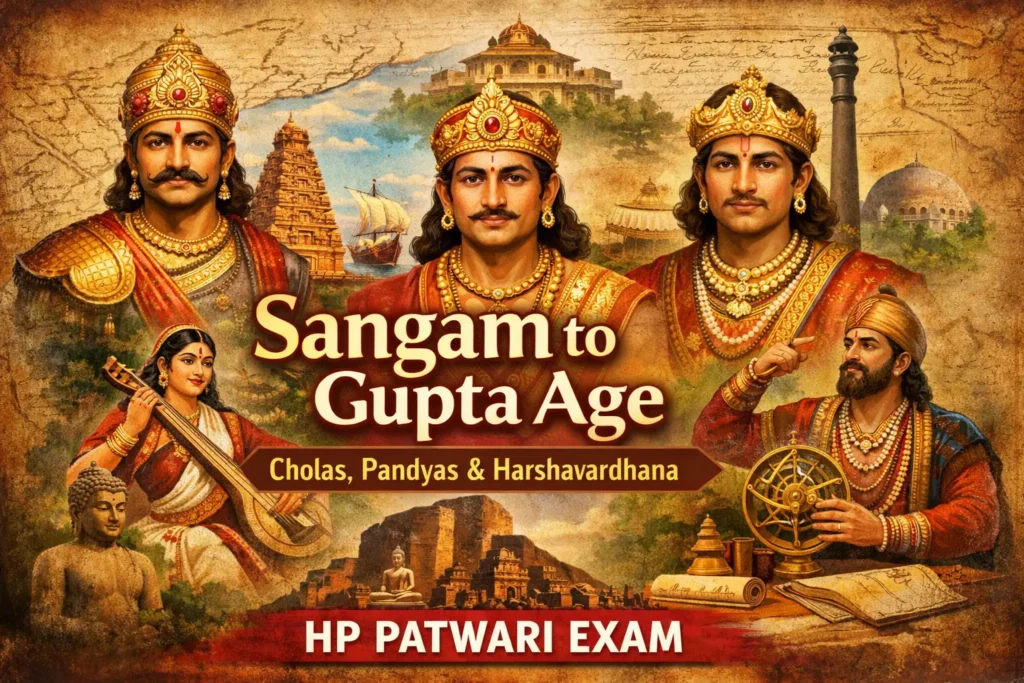
The Sangam Age, the Gupta Age, and the period of Harshavardhana are very important sections for the HP Patwari and other HPRCA examinations because they cover key developments in early Indian political, cultural, and economic history. Questions from these topics frequently appear in government exams since they represent major phases of Indian civilization. The Sangam Age introduces candidates to the early South Indian kingdoms—the Cholas, Pandyas, and Cheras—and highlights the growth of Tamil literature, trade, and regional administration. Understanding this period helps aspirants learn about early Indian society, maritime trade with the Roman world, and the development of classical Tamil culture.
The Gupta Age, often called the Golden Age of India, is equally important for competitive exams. During this period, India witnessed remarkable achievements in literature, science, mathematics, and art. Scholars such as Aryabhata contributed to astronomy and mathematics, while Kalidasa enriched Sanskrit literature. The Gupta administration, coinage system, and cultural advancements are commonly asked topics in objective exams.
The Post-Gupta period, especially the reign of Harshavardhana, marks a transition in Indian history. Harsha unified large parts of North India and promoted education, religion, and cultural exchange. Accounts by the Chinese traveler Xuanzang also provide valuable historical information. Studying these periods helps students understand the continuity and transformation of Indian civilizatio
For competitive exams like HPPSC and State PSC, these are crucial because they link political expansion,religious development, economic growth, and artistic evolution. Understanding them helps you grasp how ancient India became part of a larger Eurasian network of ideas and trade.
📘 Read carefully, think administratively, and link facts with concepts — this is the key to cracking HP exams.
🔗 Practice Daily GK here:
📅 Today’s HP GK Quiz
⏱️ Time Suggested: 10–12 Minutes
📘 Level: 10+2 Level
🎯 Useful For: HPPSC, HPRCA HP Patwari, HP Police, HP Clerk, TET
Which literary work is the main source of information about the Sangam Age?
प्रश्न 1. संगम युग की जानकारी का मुख्य स्रोत कौन-सा साहित्य है?
A. Vedas
B. Sangam Literature
C. Puranas
D. Arthashastra
A. वेद
B. संगम साहित्य
C. पुराण
D. अर्थशास्त्र
Q2. The Sangam Age mainly flourished in which region of India?
प्रश्न 2. संगम युग मुख्यतः भारत के किस क्षेत्र में विकसित हुआ?
A. North India
B. South India
C. Western India
D. Eastern India
A. उत्तर भारत
B. दक्षिण भारत
C. पश्चिम भारत
D. पूर्व भारत
Q3. Which three dynasties were prominent during the Sangam Age?
प्रश्न 3. संगम युग में कौन-सी तीन राजवंश प्रमुख थे?
A. Maurya, Gupta, Kushan
B. Chola, Chera, Pandya
C. Pallava, Chalukya, Rashtrakuta D. Satavahana, Gupta, Maurya
A. मौर्य, गुप्त, कुषाण
B. चोल, चेर, पांड्य
C. पल्लव, चालुक्य, राष्ट्रकूट
D. सातवाहन, गुप्त, मौर्य
Q4. The capital of the Chola kingdom during the Sangam Age was:
प्रश्न 4. संगम युग में चोल राज्य की राजधानी क्या थी?
A. Madurai
B. Uraiyur
C. Kanchipuram
D. Vanchi
A. मदुरै
B. उरैयूर
C. कांचीपुरम
D. वंची
Q5. The Pandya capital was:
प्रश्न 5. पांड्य राजवंश की राजधानी क्या थी?
A. Uraiyur
B. Madurai
C. Vanchi
D. Tanjore
A. उरैयूर
B. मदुरै
C. वंची
D. तंजौर
Q6. The Chera kingdom had its capital at:
प्रश्न 6. चेर राजवंश की राजधानी कहाँ थी?
A. Vanchi
B. Madurai
C. Uraiyur
D. Kanchi
A. वंची
B. मदुरै
C. उरैयूर
D. कांची
Q7. Which port city was famous during the Sangam Age?
प्रश्न 7. संगम युग में कौन-सा बंदरगाह प्रसिद्ध था?
A. Lothal
B. Puhar
C. Surat
D. Tamralipti
A. लोथल
B. पुहार
C. सूरत
D. ताम्रलिप्ति
Q8. Sangam literature was mainly written in which language?
प्रश्न 8. संगम साहित्य मुख्यतः किस भाषा में लिखा गया था?
A. Sanskrit
B. Tamil
C. Prakrit
D. Pali
A. संस्कृत
B. तमिल
C. प्राकृत
D. पाली
Q9. The famous Tamil epic “Silappadikaram” was written by:
प्रश्न 9. प्रसिद्ध तमिल महाकाव्य “शिलप्पदिकारम” किसने लिखा?
A. Ilango Adigal
B. Tiruvalluvar
C. Kamban
D. Kalidasa
A. इलंगो आदिगल
B. तिरुवल्लुवर
C. कंबन
D. कालिदास
Q10. The famous work “Tirukkural” was written by:
प्रश्न 10. प्रसिद्ध ग्रंथ “तिरुक्कुरल” किसने लिखा?
A. Ilango Adigal
B. Tiruvalluvar
C. Kamban
D. Bana
A. इलंगो आदिगल
B. तिरुवल्लुवर
C. कंबन
D. बाण
Q11. The Gupta dynasty was founded by:
प्रश्न 11. गुप्त वंश की स्थापना किसने की?
A. Chandragupta I
B. Sri Gupta
C. Samudragupta
D. Kumaragupta
A. चंद्रगुप्त प्रथम
B. श्रीगुप्त
C. समुद्रगुप्त
D. कुमारगुप्त
Q12. Who is known as the “Napoleon of India”?
प्रश्न 12. “भारत का नेपोलियन” किसे कहा जाता है?
A. Chandragupta I
B. Samudragupta
C. Skandagupta
D. Harsha
A. चंद्रगुप्त प्रथम
B. समुद्रगुप्त
C. स्कंदगुप्त
D. हर्ष
Q13. The Allahabad Pillar inscription describes the achievements of:
प्रश्न 13. इलाहाबाद स्तंभ लेख में किसकी उपलब्धियों का वर्णन है?
A. Chandragupta I
B. Samudragupta
C. Ashoka
D. Harsha
A. चंद्रगुप्त प्रथम
B. समुद्रगुप्त
C. अशोक
D. हर्ष
Q14. Who was the court poet of Samudragupta?
प्रश्न 14. समुद्रगुप्त का दरबारी कवि कौन था?
A. Kalidasa
B. Harisena
C. Bana
D. Vishakhadatta
A. कालिदास
B. हरिषेण
C. बाण
D. विशाखदत्त
Q15. Chandragupta II is also known as:
प्रश्न 15. चंद्रगुप्त द्वितीय को किस नाम से भी जाना जाता है?
A. Vikramaditya
B. Devagupta
C. Skandagupta
D. Kumaragupta
A. विक्रमादित्य
B. देवगुप्त
C. स्कंदगुप्त
D. कुमारगुप्त
Q16. The Chinese traveler Fa-Hien visited India during whose reign?
प्रश्न 16. चीनी यात्री फाह्यान भारत किसके शासनकाल में आया था?
A. Chandragupta I
B. Samudragupta
C. Chandragupta II
D. Harsha
A. चंद्रगुप्त प्रथम
B. समुद्रगुप्त
C. चंद्रगुप्त द्वितीय
D. हर्ष
Q17. The Gupta Age is known as the:
प्रश्न 17. गुप्त काल को किस नाम से जाना जाता है?
A. Dark Age
B. Golden Age
C. Iron Age
D. Silver Age
A. अंधकार युग
B. स्वर्ण युग
C. लौह युग
D. रजत युग
Q18. Who stopped the Hun invasion during the Gupta period?
प्रश्न 18. गुप्त काल में हूणों के आक्रमण को किसने रोका?
A. Kumaragupta
B. Skandagupta
C. Samudragupta
D. Chandragupta I
A. कुमारगुप्त
B. स्कंदगुप्त
C. समुद्रगुप्त
D. चंद्रगुप्त प्रथम
Q19. Nalanda University was famous during the reign of:
प्रश्न 19. नालंदा विश्वविद्यालय किस काल में प्रसिद्ध था?
A. Maurya
B. Gupta
C. Delhi Sultanate
D. Mughal
A. मौर्य
B. गुप्त
C. दिल्ली सल्तनत
D. मुगल
Q20. The famous Sanskrit poet of the Gupta period was:
प्रश्न 20. गुप्त काल का प्रसिद्ध संस्कृत कवि कौन था?
A. Kalidasa
B. Banabhatta
C. Tulsidas
D. Bharavi
A. कालिदास
B. बाणभट्ट
C. तुलसीदास
D. भारवि
Q21. Harshavardhana belonged to which dynasty?
प्रश्न 21. हर्षवर्धन किस वंश से संबंधित था?
A. Vardhana
B. Gupta
C. Maurya
D. Pallava
A. वर्धन
B. गुप्त
C. मौर्य
D. पल्लव
Q22. Harshavardhana’s capital was:
प्रश्न 22. हर्षवर्धन की राजधानी क्या थी?
A. Kannauj
B. Pataliputra
C. Ujjain
D. Delhi
A. कन्नौज
B. पाटलिपुत्र
C. उज्जैन
D. दिल्ली
Q23. The Chinese traveler who visited Harsha’s court was:
प्रश्न 23. हर्ष के दरबार में आने वाला चीनी यात्री कौन था?
A. Fa-Hien
B. Xuanzang
C. I-Tsing
D. Marco Polo
A. फाह्यान
B. ह्वेनसांग
C. इत्सिंग
D. मार्को पोलो
Q24. Who wrote “Harshacharita”?
प्रश्न 24. “हर्षचरित” किसने लिखा?
A. Kalidasa
B. Banabhatta
C. Harsha
D. Bharavi
A. कालिदास
B. बाणभट्ट
C. हर्ष
D. भारवि
Q25. Harsha was a follower of which religion?
प्रश्न 25. हर्ष किस धर्म का अनुयायी था?
A. Jainism
B. Buddhism
C. Shaivism
D. Vaishnavism
A. जैन धर्म
B. बौद्ध धर्म
C. शैव धर्म
D. वैष्णव धर्म
Q26. The Prayag Assembly was organized by:
प्रश्न 26. प्रयाग सभा का आयोजन किसने किया?
A. Samudragupta
B. Harshavardhana
C. Ashoka
D. Chandragupta II
A. समुद्रगुप्त
B. हर्षवर्धन
C. अशोक
D. चंद्रगुप्त द्वितीय
Q27. Harsha ruled approximately during which period?
प्रश्न 27. हर्ष का शासन लगभग किस काल में था?
A. 320–375 CE
B. 606–647 CE
C. 750–800 CE
D. 900–950 CE
A. 320–375 ई.
B. 606–647 ई.
C. 750–800 ई.
D. 900–950 ई.
Q28. Which drama was written by Harsha?
प्रश्न 28. हर्ष द्वारा लिखा गया नाटक कौन-सा है?
A. Ratnavali
B. Abhijnana Shakuntalam
C. Mudrarakshasa
D. Malavikagnimitram
A. रत्नावली
B. अभिज्ञान शाकुंतलम्
C. मुद्राराक्षस
D. मालविकाग्निमित्रम्
Q29. The Gupta coinage was mainly made of:
प्रश्न 29. गुप्त काल के सिक्के मुख्यतः किस धातु के थे?
A. Iron
B. Gold
C. Copper
D. Silver
A. लोहा
B. सोना
C. तांबा
D. चांदी
Q30. Which script was widely used in the Gupta period?
प्रश्न 30. गुप्त काल में कौन-सी लिपि प्रचलित थी?
A. Brahmi
B. Kharosthi
C. Nagari
D. Persian
A. ब्राह्मी
B. खरोष्ठी
C. नागरी
D. फारसी
✅ Answers
1-B, 2-B, 3-B, 4-B, 5-B,
6-A, 7-B, 8-B, 9-A, 10-B,
11-B, 12-B, 13-B, 14-B, 15-A,
16-C, 17-B, 18-B, 19-B, 20-A,
21-A, 22-A, 23-B, 24-B, 25-B,
26-B, 27-B, 28-A, 29-B, 30-A,
🔗Important Links For You
👉 HP Patwari Exam Syllabus – Prepare with the updated syllabus
👉 Latest HP Government Jobs – Check today’s vacancies
👉 HP GK (Himachal Pradesh General Knowledge)
👉 Download Weekly GK PDF
📲 Join Our WhatsApp for Daily HP GK.
📢 Get Daily HP GK, exam alerts & PDF notes directly on WhatsApp.