
HP Daily GK brings you 30 important exam-oriented GK questions for HPPSC, HP Patwari, HP Police, HP Clerk, and other HP Government exams. The HP GK questions are in both English and Hindi. The candidates preparing for HP Patwari must practice these multiple choice questions as they are based purely on HP Patwari exam syllabus.
📘 Current GK Topic: Indian National Freedom Movements (as per HP Patwari Syllabus)
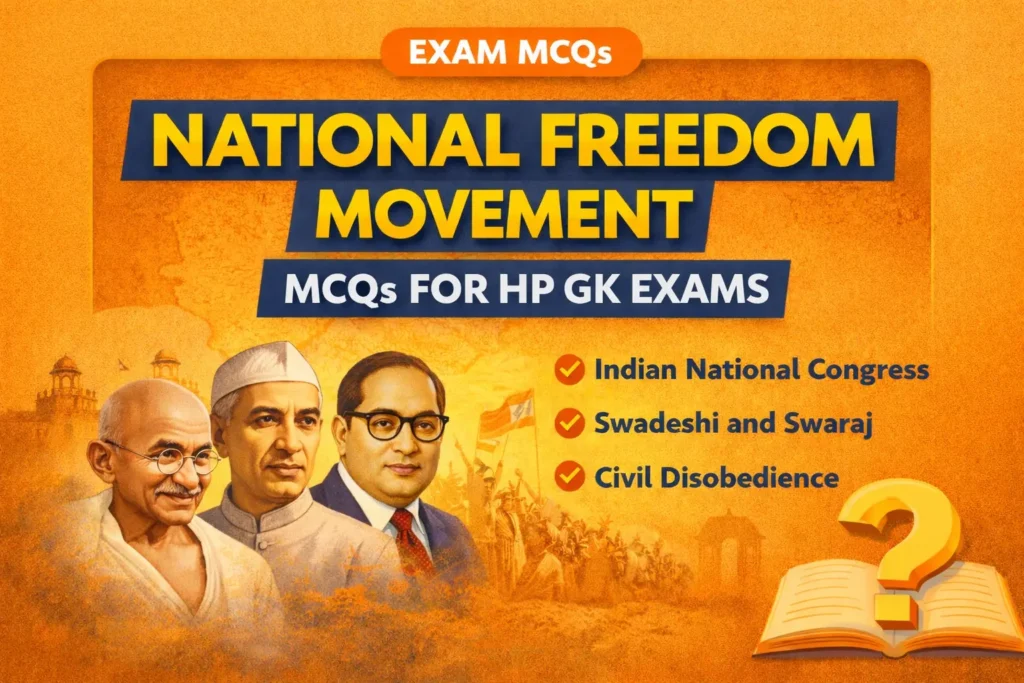
National Freedom Movement MCQs for HP Patwari Exam Preparation
The Indian National Freedom Movement is one of the most important topics in Modern Indian History for competitive exams like HP Patwari, SSC, State PSC, and other government recruitment exams. This period covers the struggle of Indians against British colonial rule and the rise of nationalist movements that ultimately led to India’s independence in 1947. Many questions in government exams are asked from events such as the Partition of Bengal (1905), Swadeshi Movement, Lucknow Pact (1916), Non-Cooperation Movement, Civil Disobedience Movement, and important agreements like the Poona Pact and Gandhi-Irwin Pact.
Quick Overview
| Year | Event | Key Leader |
|---|---|---|
| 1885 | Formation of Indian National Congress | A.O. Hume |
| 1905 | Partition of Bengal | Lord Curzon |
| 1916 | Lucknow Pact | Congress & Muslim League |
| 1917 | Champaran Movement | Mahatma Gandhi |
| 1919 | Rowlatt Act & Jallianwala Bagh | General Dyer |
| 1920 | Non-Cooperation Movement | Mahatma Gandhi |
| 1930 | Dandi March & Civil Disobedience | Mahatma Gandhi |
| 1931 | Gandhi-Irwin Pact | Gandhi & Irwin |
| 1932 | Poona Pact | Gandhi & B.R. Ambedkar |
The freedom movement involved the participation of several political organizations and leaders. The Indian National Congress (INC), founded in 1885, played a central role in organizing political movements against British rule. Over time, new political ideas such as Swaraj (self-rule), Swadeshi (use of indigenous goods), and mass civil resistance became the foundation of the nationalist struggle.
Several historic movements shaped the course of the independence struggle. The Champaran Satyagraha (1917) marked Mahatma Gandhi’s first successful experiment with satyagraha in India. Later movements like the Kheda Satyagraha (1918) and Ahmedabad Mill Strike strengthened Gandhian methods of non-violent protest. The Rowlatt Act (1919) and the tragic Jallianwala Bagh Massacre further intensified the demand for independence and united people across the country.
During the 1920s and 1930s, the national movement became more organized with the Non-Cooperation Movement, Civil Disobedience Movement, Dandi March (1930), Round Table Conferences, and Gandhi-Irwin Pact (1931). These events mobilized millions of Indians and forced the British government to reconsider its policies. Agreements such as the Poona Pact (1932) also addressed issues related to representation and social equality.
For candidates preparing for the HP Patwari exam, understanding the timeline, leaders, movements, and agreements of the freedom struggle is extremely important because many objective questions are asked from these topics. Practicing MCQs from these areas helps in revising key events quickly and improving exam accuracy.
National Freedom Movement Year and Leader
- 1885 – Formation of Indian National Congress – A.O. Hume
- 1905 – Partition of Bengal – Lord Curzon
- 1916 – Lucknow Pact – Congress & Muslim League
- 1917 – Champaran Movement – Mahatma Gandhi
- 1919 – Rowlatt Act & Jallianwala Bagh – General Dyer
- 1920 – Non-Cooperation Movement – Mahatma Gandhi
- 1930 – Dandi March & Civil Disobedience – Mahatma Gandhi
- 1931 – Gandhi-Irwin Pact – Gandhi & Irwin
- 1932 – Poona Pact – Gandhi & B.R. Ambedkar
Important Points to Remember
- Indian National Congress was founded in 1885 by A.O. Hume.
- Partition of Bengal (1905) triggered the Swadeshi Movement.
- Lucknow Pact (1916) brought Congress and Muslim League together.
- Champaran Satyagraha (1917) was Gandhi’s first satyagraha in India.
- Jallianwala Bagh Massacre (1919) shocked the entire nation.
- Dandi March (1930) marked the beginning of the Civil Disobedience Movement.
- Poona Pact (1932) resolved the issue of separate electorates for depressed classes.
Key Takeaways for HP Patwari Exam
✔ Focus on important years and movements.
✔ Remember leaders associated with each movement.
✔ Understand the sequence of events from 1885 to 1932.
✔ Pay special attention to agreements, commissions, and major protests.
The following 30 bilingual MCQs will help you revise these important topics and strengthen your preparation for the HP Patwari and other competitive exams.
📘 Read carefully, think administratively, and link facts with concepts — this is the key to cracking HP exams.
📅National Freedom Movement – Important MCQs for HP Patwari
The Indian National Freedom Movement was a long struggle against British colonial rule that included major events such as the Swadeshi Movement, Non-Cooperation Movement, Civil Disobedience Movement, and Quit India Movement. Questions from these topics are frequently asked in HP Patwari, HPPSC, HPRCA, and other competitive exams.
Quick Revision Table
| Event | Year |
|---|---|
| Indian National Congress Founded | 1885 |
| Partition of Bengal | 1905 |
| Lucknow Pact | 1916 |
| Rowlatt Act | 1919 |
| Non-Cooperation Movement | 1920 |
| Civil Disobedience Movement | 1930 |
| Poona Pact | 1932 |
⏱️ Time Suggested: 30 Minutes
📘 Level: 10+2 Level
🎯 Useful For: HPPSC, HPRCA HP Patwari, HP Police, HP Clerk, TET
National Freedom Movement – 30 MCQs (HP GK Exams)
Q1. In which year was the Indian National Congress founded?
भारतीय राष्ट्रीय कांग्रेस की स्थापना किस वर्ष हुई थी?
A. 1857 B. 1885
C. 1905 D. 1919
A. 1857 B. 1885
C. 1905 D. 1919
Q2. Who founded the Indian National Congress?
भारतीय राष्ट्रीय कांग्रेस की स्थापना किसने की?
A. Dadabhai Naoroji
B. A.O. Hume
C. Bal Gangadhar Tilak
D. Mahatma Gandhi
A. दादाभाई नौरोजी
B. ए.ओ. ह्यूम
C. बाल गंगाधर तिलक
D. महात्मा गांधी
Q3. The Partition of Bengal took place in which year?
बंगाल का विभाजन किस वर्ष हुआ था?
A. 1905 B. 1907
C. 1911 D. 1919
A. 1905 B. 1907
C. 1911 D. 1919
Q4. Who was the Viceroy of India during the Partition of Bengal?
बंगाल विभाजन के समय भारत का वायसराय कौन था?
A. Lord Curzon B. Lord Hardinge
C. Lord Irwin D. Lord Wellesley
A. लॉर्ड कर्जन B. लॉर्ड हार्डिंग
C. लॉर्ड इरविन D. लॉर्ड वेलेजली
Q5. The Swadeshi Movement started as a protest against?
स्वदेशी आंदोलन किसके विरोध में शुरू हुआ था?
A. Rowlett Act
B. Partition of Bengal
C. Simon Commission
D. Jallianwala Bagh massacre
A. रोलेट एक्ट
B. बंगाल विभाजन
C. साइमन कमीशन
D. जलियांवाला बाग हत्याकांड
Q6. The Muslim League was founded in which year?
मुस्लिम लीग की स्थापना किस वर्ष हुई थी?
A. 1905 B. 1906
C. 1916 D. 1920
A. 1905 B. 1906
C. 1916 D. 1920
Q7. The Lucknow Pact was signed in which year?
लखनऊ समझौता किस वर्ष हुआ था?
A. 1915 B. 1916
C. 1919 D. 1922
A. 1915 B. 1916
C. 1919 D. 1922
Q8. Who started the Home Rule League movement in India?
भारत में होमरूल आंदोलन किसने शुरू किया?
A. Annie Besant and Bal Gangadhar Tilak
B. Gandhi and Nehru
C. Subhas Bose
D. Lala Lajpat Rai
A. एनी बेसेंट और बाल गंगाधर तिलक
B. गांधी और नेहरू
C. सुभाष बोस
D. लाला लाजपत राय
Q9. Champaran Satyagraha was launched in which year?
चंपारण सत्याग्रह किस वर्ष शुरू हुआ था?
A. 1917 B. 1918
C. 1919 D. 1920
A. 1917 B. 1918
C. 1919 D. 1920
Q10. The Champaran movement was related to which farmers?
चंपारण आंदोलन किन किसानों से संबंधित था?
A. Indigo farmers B. Cotton farmers
C. Wheat farmers D. Tea farmers
A. नील किसान B. कपास किसान
C. गेहूं किसान D. चाय किसान
Q11. The Montagu Declaration was announced in?
मोंटेग्यू घोषणा कब की गई थी?
A. 1917 B. 1918
C. 1919 D. 1920
A. 1917 B. 1918
C. 1919 D. 1920
Q12. Kheda Satyagraha was led by?
खेड़ा सत्याग्रह का नेतृत्व किसने किया?
A. Gandhi B. Patel
C. Both A and B
D. Nehru
A. गांधी B. पटेल
C. A और B दोनों
D. नेहरू
Q13. The Ahmedabad Satyagraha was related to?
अहमदाबाद सत्याग्रह किससे संबंधित था?
A. Farmers B. Mill workers
C. Students D. Traders
A. किसान B. मिल मजदूर
C. छात्र D. व्यापारी
Q14. The Rowlatt Act was passed in which year?
रोलेट एक्ट किस वर्ष पारित हुआ?
A. 1917 B. 1918
C. 1919 D. 1920
A. 1917 B. 1918
C. 1919 D. 1920
Q15. The Jallianwala Bagh massacre occurred in which year?
जलियांवाला बाग हत्याकांड किस वर्ष हुआ था?
A. 1917 B. 1918
C. 1919 D. 1920
A. 1917 B. 1918
C. 1919 D. 1920
Q16. Who ordered the Jallianwala Bagh massacre?
जलियांवाला बाग हत्याकांड का आदेश किसने दिया?
A. General Dyer B. Lord Curzon
C. Lord Irwin D. Lord Wellesley
A. जनरल डायर B. लॉर्ड कर्जन
C. लॉर्ड इरविन D. लॉर्ड वेलेजली
Q17. The Khilafat Movement was launched in?
खिलाफत आंदोलन कब शुरू हुआ?
A. 1918 B. 1919
C. 1920 D. 1922
A. 1918 B. 1919
C. 1920 D. 1922
Q18. The Non-Cooperation Movement started in?
असहयोग आंदोलन कब शुरू हुआ?
A. 1919 B. 1920
C. 1922 D. 1930
A. 1919 B. 1920
C. 1922 D. 1930
Q19. The Swaraj Party was founded in?
स्वराज पार्टी की स्थापना कब हुई?
A. 1922 B. 1923
C. 1924 D. 1925
A. 1922 B. 1923
C. 1924 D. 1925
Q20. Who founded the Swaraj Party?
स्वराज पार्टी की स्थापना किसने की?
A. Motilal Nehru and C.R. Das
B. Gandhi and Patel
C. Tilak and Besant
D. Bose and Nehru
A. मोतीलाल नेहरू और सी.आर. दास
B. गांधी और पटेल
C. तिलक और बेसेंट
D. बोस और नेहरू
Q21. The Simon Commission arrived in India in?
साइमन कमीशन भारत कब आया था?
A. 1927 B. 1928
C. 1929 D. 1930
A. 1927 B. 1928
C. 1929 D. 1930
Q22. The Nehru Report was published in?
नेहरू रिपोर्ट कब प्रकाशित हुई?
A. 1927 B. 1928
C. 1929 D. 1930
A. 1927 B. 1928
C. 1929 D. 1930
Q23. Bardoli Satyagraha was led by?
बारडोली सत्याग्रह का नेतृत्व किसने किया?
A. Vallabhbhai Patel B. Gandhi
C. Nehru D. Tilak
A. वल्लभभाई पटेल B. गांधी
C. नेहरू D. तिलक
Q24. The Lahore session of Congress (1929) demanded?
कांग्रेस के लाहौर अधिवेशन (1929) में क्या मांग की गई?
A. Dominion status
B. Complete independence
C. Separate electorates
D. Federal system
A. डोमिनियन स्टेटस
B. पूर्ण स्वराज
C. पृथक निर्वाचन
D. संघीय व्यवस्था
Q25. The Dandi March started in which year?
दांडी मार्च किस वर्ष शुरू हुआ?
A. 1929 B. 1930
C. 1931 D. 1932
A. 1929 B. 1930
C. 1931 D. 1932
Q26. The Civil Disobedience started in which year?
सविनय अवज्ञा आंदोलन कब शुरू हुआ?
A. 1929 B. 1930
C. 1931 D. 1932
A. 1929 B. 1930
C. 1931 D. 1932
Q27. Gandhi-Irwin Pact was signed in?
गांधी-इरविन समझौता कब हुआ?
A. 1930 B. 1931
C. 1932 D. 1935
A. 1930 B. 1931
C. 1932 D. 1935
Q28. The Communal Award was announced in?
साम्प्रदायिक पुरस्कार कब घोषित किया गया?
A. 1931 B. 1932
C. 1935 D. 1937
A. 1931 B. 1932
C. 1935 D. 1937
Q29. The Poona Pact was signed between?
पूना समझौता किन-के बीच हुआ?
A. Gandhi and Ambedkar
B. Nehru and Jinnah
C. Tilak and Besant
D. Patel and Bose
A. गांधी और अंबेडकर
B. नेहरू और जिन्ना
C. तिलक और बेसेंट
D. पटेल और बोस
Q30. The Poona Pact was signed in which year?
पूना समझौता किस वर्ष हुआ?
A. 1930 B. 1931
C. 1932 D. 1935
A. 1930 B. 1931
C. 1932 D. 1935
Answers:
1-B, 2-B, 3-A, 4-A, 5-B,
6-B, 7-B, 8-A, 9-A, 10-A
11-A, 12-C, 13-B, 14-C, 15-C,
16-A, 17-B, 18-B, 19-B, 20-A
21-B, 22-B, 23-A, 24-B, 25-B,
26-B, 27-B, 28-B, 29-A, 30-C
🔗Important Links For You
👉 HP GK (Himachal Pradesh General Knowledge)
📲 Join Our WhatsApp for Daily HP GK.
📢 Get Daily HP GK, exam alerts & PDF notes directly on WhatsApp.