
HP Daily GK brings you 30 important exam-oriented GK questions for HPPSC, HP Patwari, HP Police, HP Clerk, and other HP Government exams. The HP GK questions are in both English and Hindi. The candidates preparing for HP Patwari must practice these multiple choice questions as they are based purely on HP Patwari exam syllabus.
📘 Current GK Topic: Medieval Indian History – Delhi Sultanate dynasties Mamluk Khilji Tughlaq Sayyad Lodhi (as per HP Patwari Syllabus)
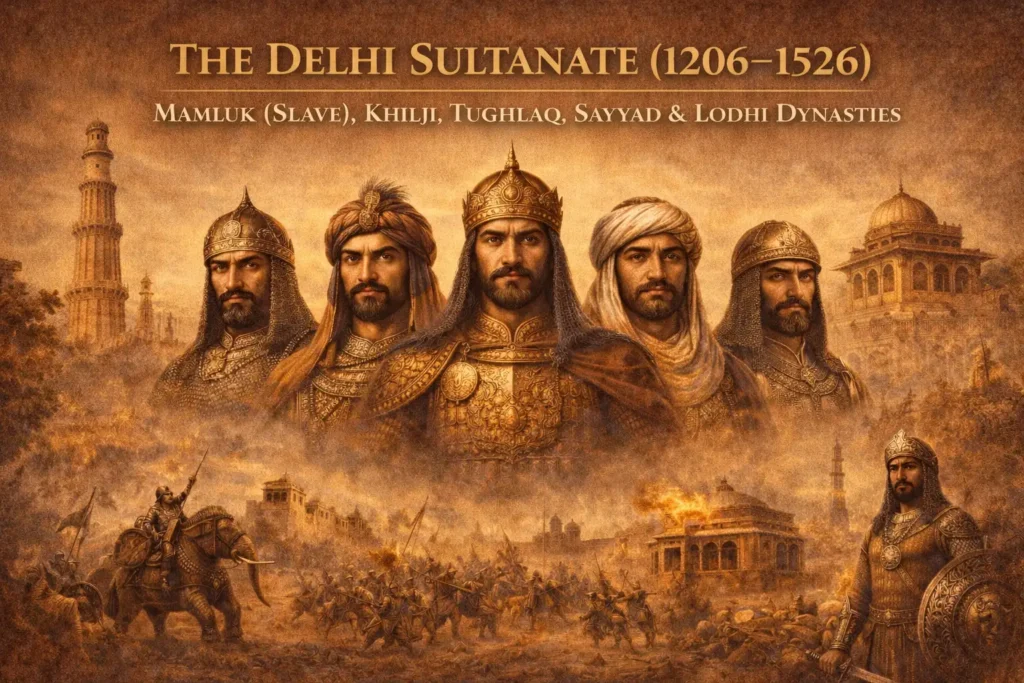
Delhi Sultanate (1206–1526): Rise, Dynasties, Administration, and Exam Essentials
The Delhi Sultanate marks a major phase in medieval Indian history, spanning 1206 to 1526 CE. During this period, a series of Turkic and Afghan rulers governed large parts of northern India from the capital city of Delhi. For competitive exams like HP Patwari, SSC, and State PSC, the Delhi Sultanate is a high-yield topic because it connects important dynasties, administrative systems, economic reforms, and key battles that shaped the subcontinent’s political landscape.
How the Delhi Sultanate Began
The foundation of the Delhi Sultanate was laid in 1206 CE by Qutubuddin Aibak, a former slave and general of Muhammad Ghori. After Ghori’s death, Aibak declared independence and established the Mamluk (Slave) Dynasty, the first ruling house of the Sultanate. Over the next three centuries, Delhi became the center of power for several dynasties that expanded and consolidated control across northern India.
Five Major Dynasties of the Delhi Sultanate
The Delhi Sultanate was ruled by five successive dynasties, each contributing to political expansion and administrative reforms:
Mamluk (Slave) Dynasty (1206–1290)
Founded by Qutubuddin Aibak. Important rulers included Iltutmish and Balban, who strengthened the Sultanate’s administration and military system.
Khilji Dynasty (1290–1320)
The most powerful ruler was Alauddin Khilji, known for his market control policy, military reforms, and successful defense against Mongol invasions.
Tughlaq Dynasty (1320–1414)
Notable rulers include Muhammad bin Tughlaq, famous for ambitious but controversial experiments such as token currency and shifting the capital to Daulatabad, and Firoz Shah Tughlaq, who focused on irrigation and public welfare.
Sayyad Dynasty (1414–1451)
Founded by Khizr Khan, this dynasty ruled during a comparatively weaker phase of the Sultanate.
Lodhi Dynasty (1451–1526)
The final ruling house of the Delhi Sultanate. The last ruler, Ibrahim Lodhi, was defeated by Babur in the First Battle of Panipat (1526), which led to the establishment of the Mughal Empire in India.
Administration and Economic Policies
The Delhi Sultanate introduced several administrative institutions that influenced later rulers. Key features included:
- The Iqta system, used for revenue collection and governance.
- Departments like Diwan-i-Arz (military) and Diwan-i-Wizarat (finance).
- Market regulations and price control under Alauddin Khilji.
- Development of cities, irrigation systems, and architecture.
These reforms helped the rulers maintain control over vast territories and ensured a structured governance system.
Why the Delhi Sultanate is Important for Exams
For HP Patwari and other government exams, the Delhi Sultanate is a frequently tested topic. Questions often focus on:
- Important dynasties and rulers
- Key battles such as the Battle of Panipat
- Administrative systems like Iqta
- Economic reforms of Alauddin Khilji
- Experiments of Muhammad bin Tughlaq
Understanding the Delhi Sultanate helps students connect the transition from early medieval kingdoms to the Mughal period, making it a crucial chapter in Indian history preparation.
Understanding the Delhi Sultanate helps candidates connect the transition from early medieval kingdoms to the Mughal Empire and understand the evolution of political institutions in medieval India.
📘 Read carefully, think administratively, and link facts with concepts — this is the key to cracking HP exams.
📅Delhi Sultanate MCQs for HP Patwari and Other Exams
Practice these 30 MCQs on Delhi Sultanate in India for HP Patwari, HPPSC, HP Police, and other Himachal Pradesh government exams.
Important Facts About the Delhi Sultanate for HP Patwari Exam
| Topic | Key Fact |
|---|---|
| Founder | Qutubuddin Aibak |
| Real consolidator | Iltutmish |
| Most powerful Khilji ruler | Alauddin Khilji |
| Capital shift | Muhammad bin Tughlaq |
| Last ruler | Ibrahim Lodhi |
⏱️ Time Suggested: 30 Minutes
📘 Level: 10+2 Level
🎯 Useful For: HPPSC, HPRCA HP Patwari, HP Police, HP Clerk, TET
Delhi Sultanate MCQs for HP Patwari / HPPSC & Other Exams
Q1. Who founded the Delhi Sultanate in India?
भारत में दिल्ली सल्तनत की स्थापना किसने की?
A. Qutubuddin Aibak
B. Iltutmish
C. Balban
D. Muhammad Ghori
A. कुतुबुद्दीन ऐबक
B. इल्तुतमिश
C. बलबन
D. मुहम्मद गौरी
Q2. The Mamluk dynasty is also known as which dynasty?
ममलुक वंश को और किस नाम से जाना जाता है?
A. Khilji dynasty
B. Slave dynasty
C. Tughlaq dynasty
D. Sayyad dynasty
A. खिलजी वंश
B. गुलाम वंश
C. तुगलक वंश
D. सैयद वंश
Q3. Who was the first woman ruler of the Delhi Sultanate?
दिल्ली सल्तनत की पहली महिला शासक कौन थी?
A. Chand Bibi
B. Razia Sultan
C. Nur Jahan
D. Mumtaz Mahal
A. चाँद बीबी
B. रजिया सुल्तान
C. नूरजहाँ
D. मुमताज महल
Q4. Who introduced the “Iqta system” in the Delhi Sultanate?
दिल्ली सल्तनत में “इकता प्रणाली” किसने शुरू की?
A. Qutubuddin Aibak
B. Iltutmish
C. Balban
D. Alauddin Khilji
A. कुतुबुद्दीन ऐबक
B. इल्तुतमिश
C. बलबन
D. अलाउद्दीन खिलजी
Q5. Who was known as the real founder of the Delhi Sultanate?
दिल्ली सल्तनत का वास्तविक संस्थापक किसे माना जाता है?
A. Qutubuddin Aibak
B. Iltutmish
C. Balban
D. Alauddin Khilji
A. कुतुबुद्दीन ऐबक
B. इल्तुतमिश
C. बलबन
D. अलाउद्दीन खिलजी
Q6. Who started the construction of the Qutub Minar in Delhi?
दिल्ली में कुतुब मीनार का निर्माण किसने शुरू किया?
A. Qutubuddin Aibak
B. Iltutmish
C. Balban
D. Firoz Shah
A. कुतुबुद्दीन ऐबक
B. इल्तुतमिश
C. बलबन
D. फिरोज शाह
Q7. Who completed the construction of Qutub Minar?
कुतुब मीनार का निर्माण किसने पूरा किया?
A. Qutubuddin Aibak
B. Iltutmish
C. Balban
D. Alauddin Khilji
A. कुतुबुद्दीन ऐबक
B. इल्तुतमिश
C. बलबन
D. अलाउद्दीन खिलजी
Q8. Who was the most powerful ruler of the Khilji dynasty?
खिलजी वंश का सबसे शक्तिशाली शासक कौन था?
A. Jalaluddin Khilji
B. Alauddin Khilji
C. Mubarak Khilji
D. Khusrau Khan
A. जलालुद्दीन खिलजी
B. अलाउद्दीन खिलजी
C. मुबारक खिलजी
D. खुसरो खान
Q9. Alauddin Khilji introduced which economic policy?
अलाउद्दीन खिलजी ने कौन-सी आर्थिक नीति लागू की?
A. Price control system
B. Land revenue reform
C. Coin reform
D. Trade tax system
A. मूल्य नियंत्रण नीति
B. भूमि राजस्व सुधार
C. मुद्रा सुधार
D. व्यापार कर प्रणाली
Q10. Which department supervised markets under Alauddin Khilji?
अलाउद्दीन खिलजी के समय बाजारों की निगरानी कौन-सा विभाग करता था?
A. Diwan-i-Arz
B. Diwan-i-Riyasat
C. Diwan-i-Wizarat
D. Diwan-i-Insha
A. दीवान-ए-अर्ज
B. दीवान-ए-रियासत
C. दीवान-ए-वजारत
D. दीवान-ए-इंशा
Q11. Who was the founder of the Tughlaq dynasty?
तुगलक वंश का संस्थापक कौन था?
A. Ghiyasuddin Tughlaq
B. Muhammad bin Tughlaq
C. Firoz Shah Tughlaq
D. Balban
A. गयासुद्दीन तुगलक
B. मुहम्मद बिन तुगलक
C. फिरोज शाह तुगलक
D. बलबन
Q12. Muhammad bin Tughlaq shifted the capital from Delhi to which city?
मुहम्मद बिन तुगलक ने राजधानी दिल्ली से किस शहर में स्थानांतरित की?
A. Lahore
B. Daulatabad
C. Agra
D. Ajmer
A. लाहौर
B. दौलताबाद
C. आगरा
D. अजमेर
Q13. Muhammad bin Tughlaq introduced which currency experiment?
मुहम्मद बिन तुगलक ने कौन-सा मुद्रा प्रयोग किया?
A. Silver coin
B. Copper token currency
C. Gold coin
D. Paper currency
A. चाँदी का सिक्का
B. तांबे की सांकेतिक मुद्रा
C. सोने का सिक्का
D. कागजी मुद्रा
Q14. Who built many canals during the Tughlaq period?
तुगलक काल में कई नहरों का निर्माण किसने करवाया?
A. Muhammad bin Tughlaq
B. Ghiyasuddin Tughlaq
C. Firoz Shah Tughlaq
D. Alauddin Khilji
A. मुहम्मद बिन तुगलक
B. गयासुद्दीन तुगलक
C. फिरोज शाह तुगलक
D. अलाउद्दीन खिलजी
Q15. The Sayyad dynasty ruled Delhi between which years?
सैयद वंश ने दिल्ली पर किस अवधि में शासन किया?
A. 1206–1290
B. 1414–1451
C. 1290–1320
D. 1320–1414
A. 1206–1290
B. 1414–1451
C. 1290–1320
D. 1320–1414
Q16. Who founded the Sayyad dynasty?
सैयद वंश की स्थापना किसने की?
A. Khizr Khan
B. Mubarak Shah
C. Muhammad Shah
D. Alam Shah
A. खिज्र खान
B. मुबारक शाह
C. मुहम्मद शाह
D. आलम शाह
Q17. Who founded the Lodhi dynasty?
लोदी वंश की स्थापना किसने की?
A. Bahlul Lodhi
B. Sikandar Lodhi
C. Ibrahim Lodhi
D. Daulat Khan
A. बहलोल लोदी
B. सिकंदर लोदी
C. इब्राहिम लोदी
D. दौलत खान
Q18. The Lodhi dynasty belonged to which ethnic group?
लोदी वंश किस जातीय समूह से संबंधित था?
A. Turks
B. Afghans
C. Arabs
D. Mongols
A. तुर्क
B. अफगान
C. अरब
D. मंगोल
Q19. Who was the last ruler of the Delhi Sultanate?
दिल्ली सल्तनत का अंतिम शासक कौन था?
A. Sikandar Lodhi
B. Ibrahim Lodhi
C. Bahlul Lodhi
D. Muhammad Shah
A. सिकंदर लोदी
B. इब्राहिम लोदी
C. बहलोल लोदी
D. मुहम्मद शाह
Q20. Ibrahim Lodhi was defeated by Babur in which battle?
इब्राहिम लोदी को बाबर ने किस युद्ध में हराया था?
A. Battle of Tarain
B. First Battle of Panipat
C. Battle of Khanwa
D. Battle of Haldighati
A. तराइन का युद्ध
B. पानीपत का प्रथम युद्ध
C. खानवा का युद्ध
D. हल्दीघाटी का युद्ध
Q21. The First Battle of Panipat was fought in?
पानीपत का प्रथम युद्ध किस वर्ष हुआ था?
A. 1526
B. 1527
C. 1556
D. 1576
A. 1526
B. 1527
C. 1556
D. 1576
Q22. Who introduced the policy of “Blood and Iron”?
“लोहा और खून” की नीति किसने अपनाई?
A. Balban
B. Alauddin Khilji
C. Muhammad Tughlaq
D. Sikandar Lodhi
A. बलबन
B. अलाउद्दीन खिलजी
C. मुहम्मद तुगलक
D. सिकंदर लोदी
Q23. The “Chalisa” group was organized by which ruler?
“चालीसा” समूह का संगठन किस शासक से जुड़ा है?
A. Iltutmish
B. Balban
C. Alauddin Khilji
D. Muhammad Tughlaq
A. इल्तुतमिश
B. बलबन
C. अलाउद्दीन खिलजी
D. मुहम्मद तुगलक
Q24. The Delhi Sultanate lasted from?
दिल्ली सल्तनत का काल कब से कब तक माना जाता है?
A. 1206–1526
B. 1000–1206
C. 1526–1707
D. 1707–1857
A. 1206–1526
B. 1000–1206
C. 1526–1707
D. 1707–1857
Q25. Who built the city of Tughlaqabad?
तुगलकाबाद शहर किसने बसाया?
A. Ghiyasuddin Tughlaq
B. Muhammad Tughlaq
C. Firoz Tughlaq
D. Balban
A. गयासुद्दीन तुगलक
B. मुहम्मद तुगलक
C. फिरोज तुगलक
D. बलबन
Q26. Diwan-i-Arz was related to which department?
दीवान-ए-अर्ज किस विभाग से संबंधित था?
A. Military department
B. Revenue department
C. Justice department
D. Trade department
A. सेना विभाग
B. राजस्व विभाग
C. न्याय विभाग
D. व्यापार विभाग
Q27. Who wrote the book “Tarikh-i-Firoz Shahi”?
“तारीख-ए-फिरोजशाही” किसने लिखी?
A. Ziauddin Barani
B. Amir Khusrau
C. Al-Biruni
D. Minhaj-us-Siraj
A. जियाउद्दीन बरनी
B. अमीर खुसरो
C. अल-बिरूनी
D. मिनहाज-उस-सिराज
Q28. Who introduced the market control system?
बाजार नियंत्रण प्रणाली किसने लागू की?
A. Alauddin Khilji
B. Balban
C. Muhammad Tughlaq
D. Sikandar Lodhi
A. अलाउद्दीन खिलजी
B. बलबन
C. मुहम्मद तुगलक
D. सिकंदर लोदी
Q29. Which ruler shifted the capital to Daulatabad?
किस शासक ने राजधानी दौलताबाद स्थानांतरित की?
A. Ghiyasuddin Tughlaq
B. Muhammad bin Tughlaq
C. Firoz Tughlaq
D. Alauddin Khilji
A. गयासुद्दीन तुगलक
B. मुहम्मद बिन तुगलक
C. फिरोज तुगलक
D. अलाउद्दीन खिलजी
Q30. The Delhi Sultanate ended with the rise of which empire?
दिल्ली सल्तनत का अंत किस साम्राज्य के उदय से हुआ?
A. Mughal Empire
B. Maratha Empire
C. Gupta Empire
D. Maurya Empire
A. मुगल साम्राज्य
B. मराठा साम्राज्य
C. गुप्त साम्राज्य
D. मौर्य साम्राज्य
Answers
1-A, 2-B, 3-B, 4-B, 5-B
6-A, 7-B, 8-B, 9-A, 10-B
11-A, 12-B, 13-B, 14-C, 15-B
16-A, 17-A, 18-B, 19-B, 20-B
21-A, 22-A, 23-A, 24-A, 25-A
26-A, 27-A, 28-A, 29-B, 30-A
🔗Important Links For You
👉 HP GK (Himachal Pradesh General Knowledge)
📲 Join Our WhatsApp for Daily HP GK.
📢 Get Daily HP GK, exam alerts & PDF notes directly on WhatsApp.